Securing access to the world

Skandia Gateway 2025 - Progress, Challenges and Sustainability Focus

07-03-2024


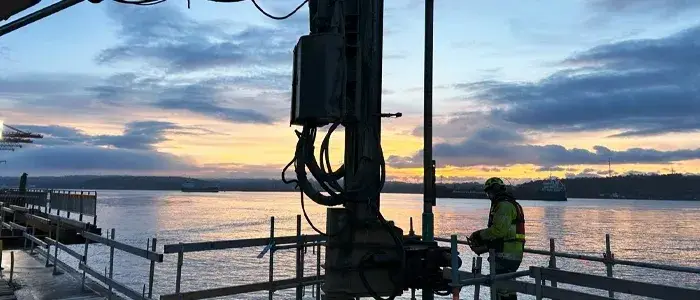
The construction of the Skandia Gateway is in full swing as we enter new phases of the project. Over the past year, we have reached key milestones, tackled challenges, and worked actively to minimize our environmental impact. Here’s the latest update on what’s happening at Skandiahamnen and what lies ahead.
Safety first – every day
Safety is a top priority in the Skandia Gateway project. Each workday begins with a safety briefing, highlighting one or two key focus areas for the week, such as lighting, fall protection, life vests, or safety glasses. Representatives from different teams then take these insights back to their groups, where they discuss risks and measures for the day's operations.
To maintain the highest safety standards, we conduct regular inspections and environmental reviews, ensuring continuous improvements and quick responses when needed.
Construction and technical progress
The work to strengthen and expand the quay is progressing according to plan, with several key activities underway:
Piling: We have driven 1,391 out of 1,575 piles, reaching 88.3% completion.
Sheet Piling: So far, we have drilled 98 out of 439 sheet pile pipes (22.3% complete) and installed 130 meters of the heaviest sheet piles in the clay. An additional 340 meters remain to be installed.
Handling challenges – collapsed sheet piling and solutions
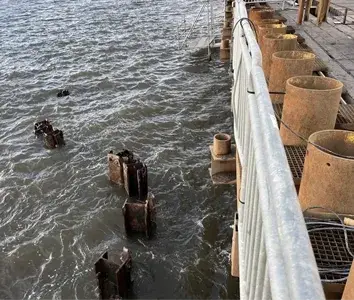
The collapsed sheet piling is leaning out towards the harbor basin. Photographer: Bengt Spolander, Construction Manager
In January, a 40-meter section of the old sheet piling collapsed due to strong winds and high waves that caused temporary fastenings to break. Initial measurements, however, showed no soil movement behind the collapsed structure, and no immediate risks were identified.
Following a thorough analysis, we decided to resume the installation of new sheet piling before the collapsed section is salvaged. To ensure safety, we conduct regular inspections, diver assessments, and area scans.
Innovative sheet pile anchoring
In certain areas along the quay, we are using anchored sheet piling, where the piles are fastened into bedrock with welded steel pipes. This method ensures long-term stability by accounting for geotechnical loads, lifespan, and corrosion resistance. In this project, anchoring is necessary where the bedrock lies shallower than -28 meters, as the sheet piles need to be secured in solid rock for optimal stability.
Reducing climate impact – measurable and effective actions
The Skandia Gateway is the first infrastructure project where we systematically measure our CO₂ emissions from construction materials, machinery, and other resources. Our goal is to reduce emissions by at least 32%, and early results show that our material choices and strategies are making a difference.
Efficient Transport: Deeper and wider fairways allow larger vessels to carry more cargo, reducing the number of ship calls and emissions per ton of transported goods.
Sustainable Materials: We use recycled steel instead of newly produced steel, which has cut the project’s carbon footprint by 15%. Additionally, we have reduced the cement content in concrete by replacing part of it with granulated blast furnace slag, a byproduct of steel production with a lower environmental impact.
Fossil-Free Fuel: All vehicles used in the project run on 100% HVO fuel.
To ensure we meet our climate goals, the Port of Gothenburg conducts three climate calculations per year and has tasked NCC with identifying additional ways to further reduce emissions.
Collaboration and transparency – key to success
Close collaboration between the Port of Gothenburg, the Swedish Maritime Administration, and NCC is crucial to the project's success. Through a partnering model, we have established a transparent and efficient process where long-term planning and daily decisions are made together.
We hold monthly follow-ups with NCC to monitor and reduce carbon emissions, ensuring that environmental considerations are integrated into all phases of construction – from procurement to execution.
Stay tuned
The Skandia Gateway is one of Sweden’s most significant infrastructure projects for the future of maritime trade. We look forward to another exciting year as we take the next steps in developing the Port of Gothenburg.
Upcoming dredging – the next phase of the project
In November 2024, the Swedish Maritime Administration issued a procurement notice for the upcoming dredging contract, a critical part of the project. The dredging work, set to begin in August 2026, includes:
Deepening the fairway to accommodate larger container vessels at the upgraded quay in Skandiahamnen.
Handling dredged material and adjusting navigation markers.
Scheduled project completion by February 2028.
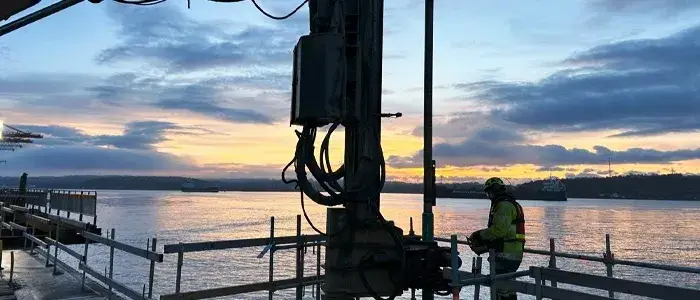
07-03-2024
Skandia Gateway 2025 - Progress, Challenges and Sustainability Focus
The construction of the Skandia Gateway is in full swing as we enter new phases of the project. Over the past year, we have reached key milestones, tackled challenges, and worked actively to minimize our environmental impact. Here’s the latest update on what’s happening at Skandiahamnen and what lies ahead.
Safety first – every day
Safety is a top priority in the Skandia Gateway project. Each workday begins with a safety briefing, highlighting one or two key focus areas for the week, such as lighting, fall protection, life vests, or safety glasses. Representatives from different teams then take these insights back to their groups, where they discuss risks and measures for the day's operations.
To maintain the highest safety standards, we conduct regular inspections and environmental reviews, ensuring continuous improvements and quick responses when needed.
Construction and technical progress
The work to strengthen and expand the quay is progressing according to plan, with several key activities underway:
Piling: We have driven 1,391 out of 1,575 piles, reaching 88.3% completion.
Sheet Piling: So far, we have drilled 98 out of 439 sheet pile pipes (22.3% complete) and installed 130 meters of the heaviest sheet piles in the clay. An additional 340 meters remain to be installed.
Handling challenges – collapsed sheet piling and solutions
In January, a 40-meter section of the old sheet piling collapsed due to strong winds and high waves that caused temporary fastenings to break. Initial measurements, however, showed no soil movement behind the collapsed structure, and no immediate risks were identified.
Following a thorough analysis, we decided to resume the installation of new sheet piling before the collapsed section is salvaged. To ensure safety, we conduct regular inspections, diver assessments, and area scans.
The collapsed sheet piling is leaning out towards the harbor basin. Photographer: Bengt Spolander, Construction Manager
Innovative sheet pile anchoring
In certain areas along the quay, we are using anchored sheet piling, where the piles are fastened into bedrock with welded steel pipes. This method ensures long-term stability by accounting for geotechnical loads, lifespan, and corrosion resistance. In this project, anchoring is necessary where the bedrock lies shallower than -28 meters, as the sheet piles need to be secured in solid rock for optimal stability.
Reducing climate impact – measurable and effective actions
The Skandia Gateway is the first infrastructure project where we systematically measure our CO₂ emissions from construction materials, machinery, and other resources. Our goal is to reduce emissions by at least 32%, and early results show that our material choices and strategies are making a difference.
Efficient Transport: Deeper and wider fairways allow larger vessels to carry more cargo, reducing the number of ship calls and emissions per ton of transported goods.
Sustainable Materials: We use recycled steel instead of newly produced steel, which has cut the project’s carbon footprint by 15%. Additionally, we have reduced the cement content in concrete by replacing part of it with granulated blast furnace slag, a byproduct of steel production with a lower environmental impact.
Fossil-Free Fuel: All vehicles used in the project run on 100% HVO fuel.
To ensure we meet our climate goals, the Port of Gothenburg conducts three climate calculations per year and has tasked NCC with identifying additional ways to further reduce emissions.
Collaboration and transparency – key to success
Close collaboration between the Port of Gothenburg, the Swedish Maritime Administration, and NCC is crucial to the project's success. Through a partnering model, we have established a transparent and efficient process where long-term planning and daily decisions are made together.
We hold monthly follow-ups with NCC to monitor and reduce carbon emissions, ensuring that environmental considerations are integrated into all phases of construction – from procurement to execution.
Upcoming dredging – the next phase of the project
In November 2024, the Swedish Maritime Administration issued a procurement notice for the upcoming dredging contract, a critical part of the project. The dredging work, set to begin in August 2026, includes:
Deepening the fairway to accommodate larger container vessels at the upgraded quay in Skandiahamnen.
Handling dredged material and adjusting navigation markers.
Scheduled project completion by February 2028.
Stay tuned
The Skandia Gateway is one of Sweden’s most significant infrastructure projects for the future of maritime trade. We look forward to another exciting year as we take the next steps in developing the Port of Gothenburg.